
As we move toward 2026, the flexible packaging sector continues to push into new territory. Primarily driven by sustainability legislation, rapid material innovation, brand demands, and major jumps in automation. Whether you’re a converter, supplier, CPG brand, engineer, or a buyer, the landscape is evolving fast. Below are the key trends that will help define flexible packaging in 2026.
Sustainability Becomes Science-Based, Not Just Marketing Based
Sustainability isn’t new. In 2026 it becomes far more data-driven and compliance-focused.

Key Developments:
- EPR (Extended Producer Responsibility) compliance materials become the standard for many states.
Mono-material structures will dominate new product development as brands seek recyclable PE, PP, and PET-based solutions.- PCR (post-consumer recycled content) will no longer be a “nice to have”. We can expect brand mandated PCR percentages in certain categories.
- Growth in recycle-ready laminations and solventless adhesives designed for film circularity.
What It Means:
Converters will need reliable material sourcing, excellent barrier structure characteristics, and supporting documentation that satisfies the tightening of compliance requirements. Brands will most likely lean heavily on suppliers who can prove and execute both performance and sustainability claims.
Read more about flexible film packaging sustainability here.
High-Barrier Films Evolve for E-Commerce and Shelf-Life Extension
The intersection of food safety, e-commerce fulfillment, and global distribution is driving rapid growth in next-generation barrier films.
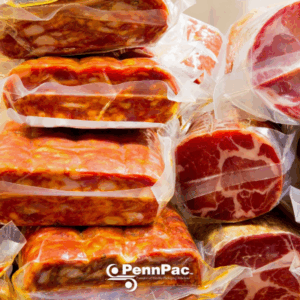
Look for expansion in:
- Enhanced PET & BOPP barrier coatings
- AlOx and SiOx high-clarity barrier solutions
- Advanced anti-fog and seal-integrity layers
- Hybrid barrier structures
2026 will reward film technologies that can simultaneously preserve freshness, reduce waste, and lower the carbon footprint compared to traditional structures.
Converting Automation Accelerates: AI Enters the Slitting Room
Expect rapid adoption of automation and AI-driven converting, especially in slitting, rewinding, inspection, and quality control.
Major automation themes for 2026:
- Vision systems with real-time defect detection
- Predictive maintenance tools for uptime optimization
- AI-assisted roll changeovers, tension control, and pattern recognition
- Robotic core handling, packaging, and palletizing
- Digital dashboards that unify production data
Converters who embrace automation will see significant gains in lead time reduction, precision, consistency, and throughput. All, a major differentiator as volumes increase and tolerances tighten.
Domestic Supply Chain Redundancy Becomes a Competitive Advantage
2020–2023 reshaped procurement strategies, and by 2026, brands will double down on domestic warehousing, stateside converting, and multi-facility redundancy.
Drivers include:
- Port congestion issues re-emerging cyclically
- Tariff uncertainty
- Risk mitigation for high-volume CPGs
- Demand for shorter lead times and stable pricing
Suppliers, like PennPac, with multiple U.S. locations, in-house converting, and inventory programs (like make-and-hold) will be preferred partners for long-term security.
Premiumization Through Print Quality and Reclose Features
Consumers continue to reward packaging that looks better, seals better, and performs better.
Top premiumization trends for 2026:
- Growth in high-impact flexographic and digital print enhancements
- Wider use of matte/gloss patterning
- Increased adoption of zipper re-close systems, functional fitments, and easy-open features
- Surge in windowed pouches combined with high-barrier materials
Packaging isn’t just protection. It’s brand communication. Expect CPGs to invest heavily in this segment.
Rise of Format Flexibility: From Stand-Up Pouches to “Micro-Formats”
New equipment and film technologies are enabling entirely new package formats, especially in single-serve, on-the-go, and meal-prep packaging.
Formats to watch in 2026:
- Micro-portions and precision-dose packets
- High-speed stick-pack growth (supplements, hydration powders)
- Thermoforming films with improved clarity and puncture resistance
- Eco-friendly lidding films replacing rigid lids
- Hybrid pouch-tray structures for ready-meal applications
Flexibility, both literally and operationally, will continue to reshape product design.
Data Transparency Becomes Expected by Large CPGs
As procurement becomes more analytics-driven, brands want transparency into material origins, lead times, sustainability metrics, and quality controls.
Expect growing demand for:
- Real-time order visibility
- Digital certificates of analysis (COA)
- Automated quality reports
- Environmental impact documentation (OTR, WVTR, recyclability tests)
The suppliers that provide data proactively will win loyalty in 2026.
How PennPac Helps Brands Stay Ahead of 2026’s Packaging Trends
As these trends accelerate, PennPac is uniquely positioned to help brands adapt quickly and confidently. Ultimately, offering brands stateside facilities, in-house slitting, make-and-hold inventory programs, and deep expertise across BOPP, PET, CPP, lidding films, and barrier structures. PennPac supports everything from sustainability transitions to supply-chain resilience. Our team works closely with CPGs, converters, and packaging engineers to ensure fast lead times, consistent quality, and technical alignment with 2026’s biggest shifts. Whether you’re moving toward mono-material solutions, enhancing shelf life, upgrading film formats, or strengthening domestic redundancy, PennPac has it covered.
PennPac delivers the reliability, responsiveness, and film expertise needed to meet the next wave of industry demands.
Conclusion
Flexible packaging in 2026 will be defined by efficiency, sustainability, automation, and high-performance materials. Companies that invest early, whether in mono-material innovation, domestic inventory programs, or AI-enhanced converting, will put themselves in a position to lead.
Reach out to PennPac today to start your conversation!